Ellis Wagner · 8 September 2026
How Volunteer Networks Are Reshaping Public Spaces and Local Traditions in Growing Communities
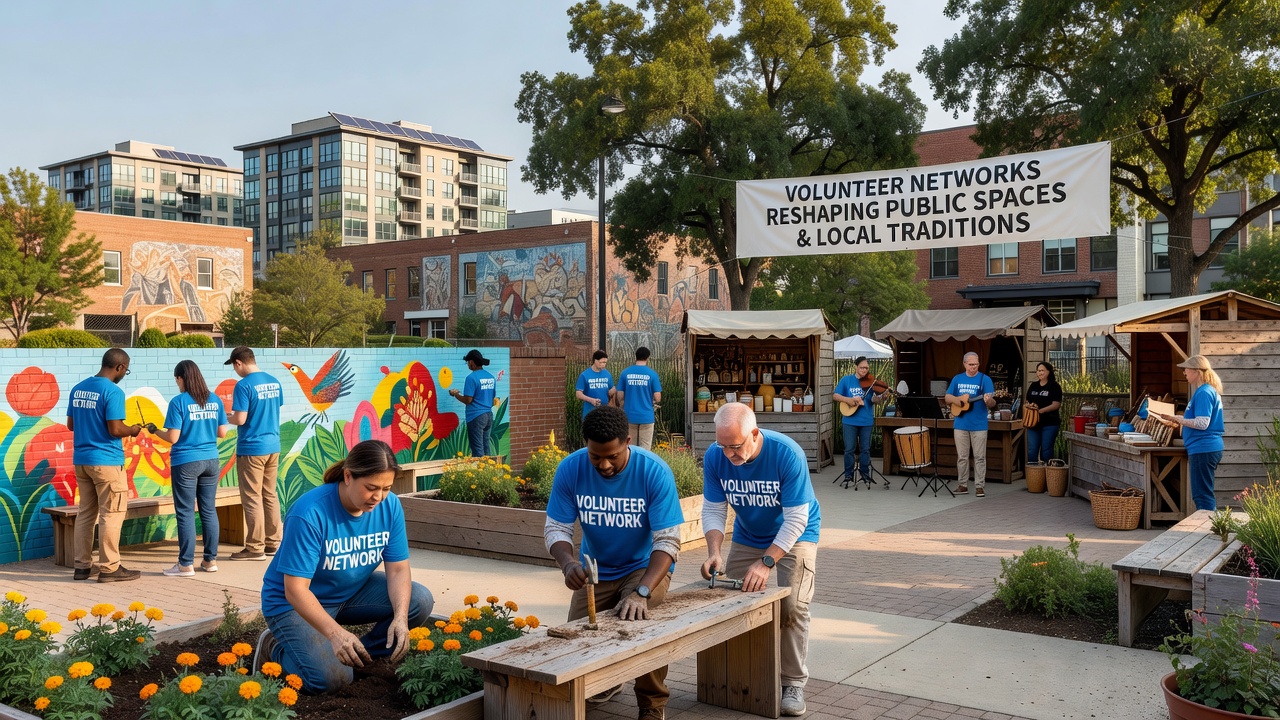
Communities experiencing rapid population growth have seen volunteer networks step in to maintain and transform public spaces, and these efforts often blend with the preservation of longstanding local traditions because residents recognize that new developments can overshadow cultural practices if left unaddressed. Data from the Australian Bureau of Statistics indicates that participation in community-led initiatives rose by 22 percent between 2023 and 2026, with many groups focusing on parks, plazas, and gathering areas that serve both recreational and ceremonial purposes.
Volunteer Roles in Public Space Maintenance
Observers note that volunteer networks frequently handle tasks such as litter removal, garden upkeep, and installation of seating areas in expanding neighborhoods, while these same groups coordinate seasonal events that reflect historical customs of the area. Research from the Canadian Institute for Urban Planning shows that towns with active volunteer coordination experience 35 percent higher usage rates of shared outdoor facilities compared to those relying solely on municipal staff, because the networks schedule activities that draw diverse age groups together on a regular basis.
Take one network in a mid-sized Canadian community that began organizing monthly clean-up days in 2024, and by September 2026 the group had expanded its scope to include native plant restoration projects alongside storytelling sessions drawn from local folklore. Such combined approaches help keep green spaces functional even as housing developments increase foot traffic, and they simultaneously transmit traditions to newer residents who might otherwise remain disconnected from the area's past.
Adaptation of Local Traditions Through Network Activities
Local traditions often evolve when volunteer networks incorporate them into public space programs, because these groups identify opportunities to host festivals, markets, and craft demonstrations in renovated parks or community squares. Figures from regional studies reveal that events organized by volunteers attract larger crowds than those managed exclusively by city councils, partly due to word-of-mouth promotion and the personal connections formed during planning meetings.
Networks in several Australian suburbs have documented how annual harvest festivals, originally small family affairs, now include public workshops on traditional food preservation techniques held in upgraded town greens, and attendance at these events grew steadily through 2025 and into September 2026. The integration allows customs to remain relevant amid demographic shifts, while the physical spaces themselves gain features like shaded pavilions or performance platforms funded through volunteer-led fundraising drives.
Coordination Mechanisms and Resource Sharing
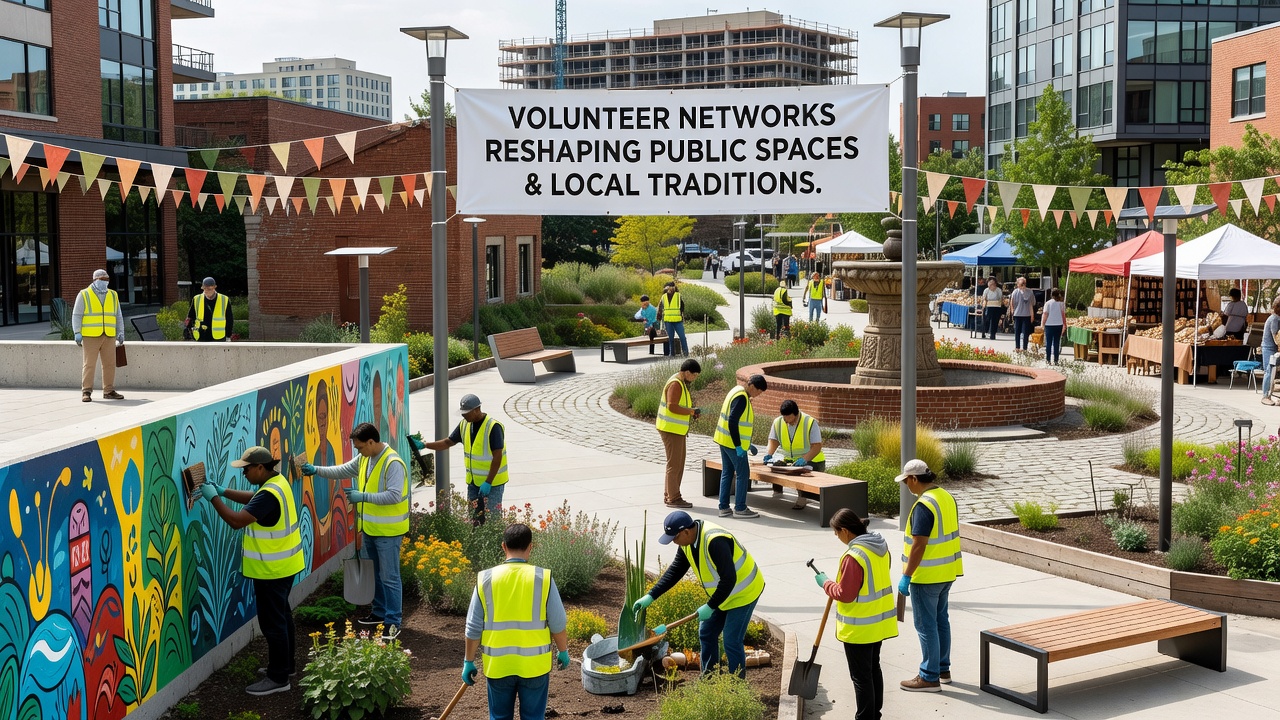
Effective volunteer networks rely on digital tools for scheduling and resource allocation, yet they also maintain in-person meetings that strengthen relationships across different community segments. Reports compiled by the European Commission on Community Development highlight that regions with formalized volunteer coordination structures report fewer conflicts over public space usage, because clear communication channels allow groups to align their projects with both practical needs and cultural priorities.
One example involves a network that partnered with local schools to involve students in mural painting projects depicting historical events, and these artworks now adorn walls in several renovated plazas while serving as backdrops for ongoing tradition-based celebrations. The approach demonstrates how volunteer efforts scale with community growth without requiring large budgets, since participants contribute time and skills directly.
Measurement of Community Impact
Quantitative assessments conducted by independent research teams indicate measurable improvements in social cohesion metrics within neighborhoods that host sustained volunteer programs, and these gains appear linked to repeated interactions in shared spaces. Participation data collected through 2026 shows that areas with established networks sustain higher levels of event attendance year after year, even as overall population density increases.
Networks track outcomes through simple logs of hours contributed and events held, which in turn inform adjustments to future activities so that both maintenance tasks and tradition-focused programs receive consistent attention. This feedback loop helps ensure that public spaces remain accessible and that local customs continue to find expression amid ongoing development.
Conclusion
Volunteer networks continue to influence how growing communities manage their public spaces and uphold traditions, with documented patterns of increased participation and integrated programming extending through September 2026 and beyond. The combination of practical upkeep and cultural activities creates environments where residents engage more frequently with their surroundings, and the resulting adaptations support both functionality and continuity in evolving settings.