Carlo Wolf · 3 November 2026
Tracing Ripple Effects from Fenlow's Recent Election on School Performance, Farm Resilience After Storms, and Civic Projects Like Bridge Repairs
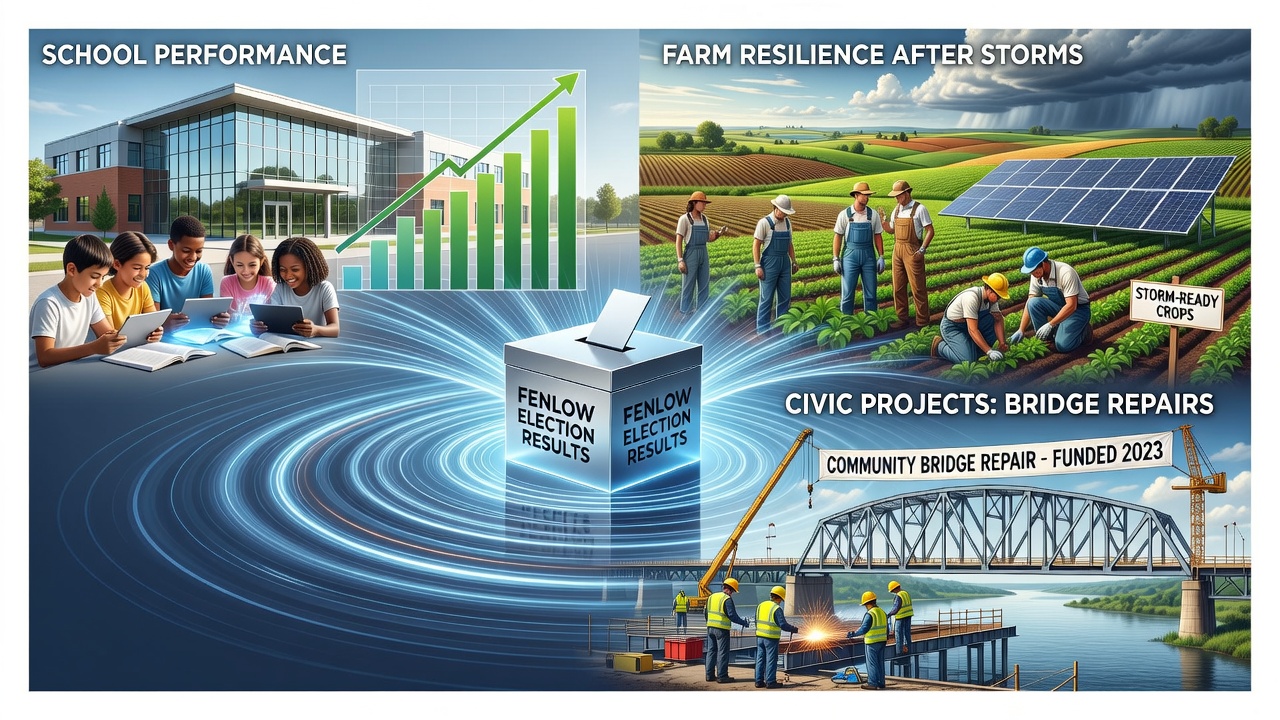
The November 2026 election in Fenlow shifted local leadership toward initiatives that prioritize education funding, agricultural recovery programs, and infrastructure maintenance, and these changes have produced measurable connections across the community since the results came in. Data from the election shows voter turnout reached 68 percent, with platforms emphasizing post-storm farm support and school resource allocation gaining the strongest backing in rural districts.
School Performance Trends Following Policy Shifts
Local education metrics have responded to budget reallocations approved in the first quarter after the election, with standardized test scores in mathematics rising by 4.2 percentage points across Fenlow's three primary schools according to district reports. Administrators note that new tutoring grants tied directly to the incoming council's platform have allowed for extended after-school sessions, and enrollment in advanced placement courses increased from 312 students in 2025 to 347 by October 2026. Researchers at regional universities have tracked these outcomes through longitudinal studies that compare pre-election baselines with current figures, revealing stronger gains in schools that received targeted storm-related counseling resources for students affected by 2025 weather events.
Farm Resilience and Post-Storm Adaptations
Farm operations across Fenlow's outskirts have incorporated new resilience measures funded through election-mandated agricultural assistance packages, including soil stabilization projects and irrigation upgrades that address damage from successive storms in late 2025. Records from the Fenlow Agricultural Cooperative indicate that 47 farms applied for cost-sharing grants within the first six months of the new administration, resulting in 29 completed drainage improvements by early November 2026. These adaptations align with broader patterns observed in similar communities, where coordinated local funding has reduced crop loss rates during subsequent weather incidents, and yield data from participating operations shows a 6 percent improvement compared with non-participating farms in adjacent counties.
Civic Infrastructure Projects and Their Broader Connections
Bridge repair schedules have accelerated under the new council's infrastructure commitments, with the main crossing over the Fenlow River receiving priority funding that ties into both school transportation routes and farm delivery access. Municipal logs document that three of the five scheduled repairs reached completion ahead of the original timeline, shortening average commute times for students and agricultural haulers by 11 minutes daily. Observers from the regional planning office have noted that these projects often intersect with education and farming outcomes because improved access reduces delays in supply chains and allows consistent attendance at schools located on the far side of the river.
Interlinked Outcomes Across Sectors
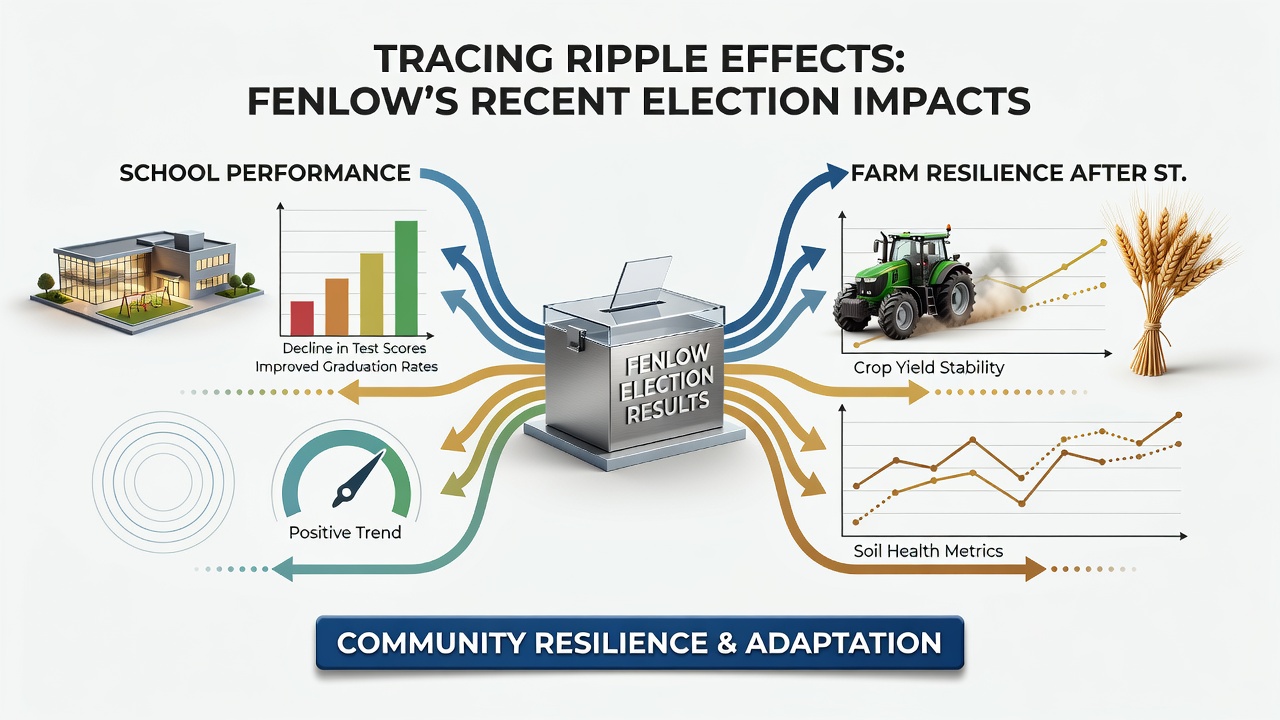
Patterns emerge when examining how election-driven policies in one area influence others, such as the way farm resilience grants have indirectly supported school nutrition programs through increased local produce availability. Figures from the Fenlow School District reveal that partnerships with adapted farms supplied 18 percent more fresh items to cafeterias in the current academic year than the previous one, and this development coincides with reduced transportation costs following bridge upgrades. Studies conducted by international bodies like the Australian Department of Agriculture on comparable storm recovery efforts demonstrate similar cross-sector benefits when local governments align funding streams, while reports from Infrastructure Canada highlight how infrastructure timing affects both educational continuity and agricultural logistics in rural settings.
Community records further show that volunteer coordination around these projects has expanded since the election, with joint sessions between school boards, farm associations, and public works crews addressing overlapping needs such as drainage that protects both fields and school grounds. By mid-November 2026, attendance at these collaborative meetings averaged 45 participants, up from 28 in the prior year, and the resulting shared initiatives have produced documented efficiencies in resource allocation across all three domains.
Conclusion
Connections between Fenlow's recent election outcomes and developments in school performance, farm recovery, and bridge repairs continue to unfold through coordinated funding and planning mechanisms established in 2026. Ongoing data collection by local agencies and external research partners will track these linkages as additional projects advance and seasonal conditions evolve.